Dawn (Octavia Butler): Book Review

Science Fiction; Fantasy; Post-Apocalyptic ♠♠♠♠♠

Author: Octavia Butler

Something a little different today: a book review of one of my all-time science fiction favorites (expect a few more scattered book reviews in the future). This book was published in 1987, the first of the Xenogenesis trilogy. It holds a rating of 4.09 on Goodreads.

Lilith Lyapo awoke from a centuries-long sleep to find herself aboard the vast spaceship of the Oankali. Creatures covered in writhing tentacles, the Oankali had saved every surviving human from a dying, ruined Earth. They healed the planet, cured cancer, increased strength, and were now ready to help Lilith lead her people back to Earth–but for a price.

This is a brilliant fantasy narrative that never misses an opportunity to remind the reader of the ongoing atrocities that exist in our world, while maintaining an intriguing story of its own.

I read Dawn without having ever really engaged with science fiction or fantasy before-hand, and it opened so many new doors for me. It was a very unique experience because I felt as though I was being introduced to a new world alongside the character, Dawn, who wakes up centuries after the destruction of Earth to find herself on an alien planet she never knew existed. In learning about the Oankali creatures and their way of life, Dawn is forced to reconsider everything she once knew about the world and how it works. As a result, a great number of issues are explored, making reading the book an extremely fruitful exercise in critical thought.

Please note: As I discuss the themes, some plot points will be eluded to, prompting this “minor spoilers” notice.

Race

Octavia Butler is one of the few renowned black sci-fi writers. So it’s no surprise that this book explores issues of race. What is a surprise, however, is that the exploration unfolds on two levels.

Dawn (a black woman) is the chosen one, that is, the Oankali have decided she will be a leader among a small group of people salvaged from Earth to restore it with them. However, prepping her for her return often mirrors the experiences of black slaves. She was taken from her home (Earth) without consent. She is kept in small, bare quarters, and initially told nothing about where she is or why. Her captors study her from a position of superiority and authority. Her attempts at rebellion result in punishment; and eventually she learns that the only way to survive is to accept her situation.

At this point, the roles shift to some extent. Now, Dawn has the opportunity to study the Oankali. She finds their appearance disturbing, and their culture impossible to relate to. In many ways, her Othering of the Oankali also mirrors the concept of race-supremacy.

Gender and Sexualities

Dawn is a strong female lead and the idea that she is chosen to be the first person back on Earth also positions her as a matriarch. Of course, there are feminist connotations to this that I can appreciate; but it is the Oankali that become the most interesting in regards to concepts of gender.

The Oankali can be male, female, or neutral. Of the three genders, only the neutral sex is the only one that can procreate. In order to do this, it must mate with a male and female (simultaneously). The Oankali therefore must maintain three-way relationships, and each child has three parents.

The entire concept is difficult to grasp and the scenes in which it is explained or performed are difficult to follow. This allows us to think about how narrow mainstream understandings of gender and sexualities are, and opens up discussions of traditional values. For Dawn, the idea of sex with the Oankali becomes a point of serious self-evaluation and stress.

Reproductive Rights

In order to rebuild the world, repopulation must take place. The Oankali have saved hundreds of humans, both male and female, but they are not planning on simply returning them to Earth alone. In fact, the Oankali believe it would be morally wrong to give Earth back to humans who would (according to their genetic makeup) inevitably destroy themselves and the planet once again. The compromise? The next generation to inhabit Earth would have to be human/oankali.

Interspecies relationships mean there is a lot at stake, namely, the continuation of the human race (or what will be left of it). Dawn and the other humans must decide how they feel about the extinction of a purely human breed – and whether they even have a choice in the matter.

Final Thoughts

This book introduced me to a genre, and made me think about so many aspects of humanity and society.

The prose were not the most elegant, but the story was fascinating. The plot does not move very quickly, but that is to serve the purpose of making the reader think about the ideas being presented. The main character’s point of view is just the right amount of confused, and I found that for the most part she was believable, even if not relatable. The book surprised me, and as far as conceits of the genre go, I think it deconstructed them in a way that made it a wonderful introductory text. A lot of issues were explored, and adequately discussed in the moments where Dawn and the Oankali try to understand one another.

I give this book 5 spades ♠♠♠♠♠*

*My rating is based on a five-spade system. The rating is decided based upon how well/uniquely the book: 1) develops story and plot; 2) develops characters; 3) accomplishes or deconstructs the conceits of its genre; 4) raises thought-provoking issues; 5) discusses important issues. This system has been developed according to my own definition of what makes a book "good." It is therefore subjective.
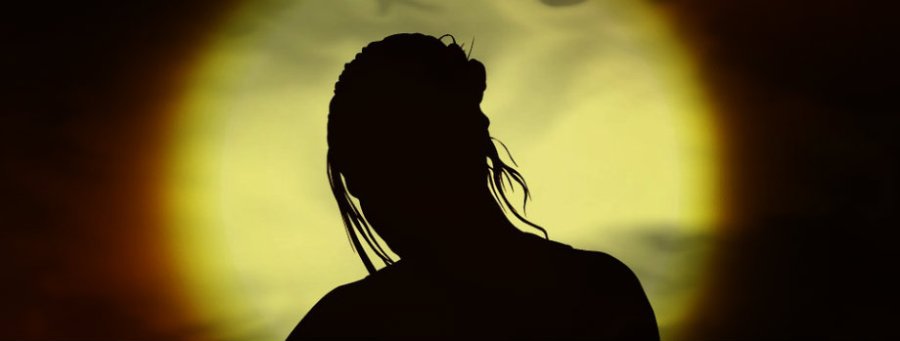
Night From Within

Dusk was settling in; no escape.

In the distance, a wrangle echoed.

Her propinquity with night suddenly ignited.

Like the blackness of pupils fixated forward,

The night called out her name.

An opal moon peered down devotedly.

Transfixed, she glared back at it.

A snake-like sensation crawled through her.

The night; it felt so divine.

Frightening; tantalizing; misinterpreted – a warning unheeded.

Provoked by its charm, she transformed.

With morality shadowed; monstrosity shined through.

The darkness was always so inviting.

Edacity came from within, of course.

The night was not at fault.

Shyla Fairfax-Owen ©


The Anticlimax

I guess you could say it was like a dream. The kind of dream that you’re aware of, but isn’t quite lucid. You go through the motions; let the dream carry you, because fighting it seems like a waste of energy. Yeah – I guess you could say dying was like a dream.

And I wasn’t alone. Death was a strong presence, there to collect – more patient than a bookie, but threatening nonetheless. I tried to laugh, really, I did. It was funny; like a bad movie that’s meant to be taken seriously but can’t be. I think they call those cult classics.

My death: A Cult Classic. I like the sound of that. It’s fitting, since my life turned out to be an accidental joke with an anticlimactic punch line.

“So? What now?” I ask Death. My tone is almost annoyed; almost apathetic; definitely irascible. I suddenly think I might have to take a number and stand in a line, and the mere thought of it is infuriating. But that’s not what happens.

Death leads me down a tunnel. There’s no light at the end of it or anything cliché like that. But it is a tunnel that seems to go on forever. It strikes me that my legs aren’t aching though, and I have to appreciate that. Silver linings.

“This isn’t going to be a ‘pick a door’ kind of deal is it? I hate those,” I snicker.

We finally arrive at a threshold. Beyond it, there is blackness. It’s absence of color, absence of light, absence of life. It makes me very uncomfortable, and I can’t even think of a snarky remark to cut the tension.

Death gestures for me to sign in, and I do. I sign my name, and beside it appears today’s date – my date of death. Again, I’m uncomfortable. It’s slowly but surely becoming real.

I look at Death. Death is also absence. There’s no black hooded cloak; rather, Death is just a shadow. And that’s when I realize, it’s my own shadow. I squint for a better look, but it’s unnecessary. For at that moment, the Shadow is coming to life. First, the eyes, then the hands. A vibrancy takes hold, as though watching one’s reflection manifest from thin air. Terrified, I instinctively hold my own hands in front of me. But they are dissolving, like sand in acid rain. And then… everything goes dark.

When the light comes back, I’m something altogether different.

*****

“Are you a ghost?” she asks me. I smile. Mainstream cinema has taken on the unfortunate task of representing a figure of the afterlife that floats through air and has a transparency about it. That’s why she’s confused. Indeed, I float. Indeed, my form is less than solid. But ghosts aren’t real. And I am.

“Not exactly,” I say. “I’m a spirit of the Otherworld.”

She ponders on this for a second; bites her bottom lip, then resolves to obtain more information.

“What does that mean?” she asks. “Are you dead?”

I smile, fully expecting to have to answer such questions. “Not exactly. My consciousness once belonged to a human, but that being has died, and its consciousness re-formed. It belongs to the Otherworld now, and it lives inside of me.”

I pause to let the little girl take it in. She is a willing believer, provided she is given the right tools. I watch her carefully process what I have said, and when I decide she is ready for more, I continue.

“Not everyone cans see us. You have a very special gift, and it will become stronger as you grow.”

She looks up at me, doe-eyed and curious. The compliment appeases her, but she’s still confused. I can see another question bubbling in her gut.

“So,” she finally begins, slowly. “Why are you here?”

Truth-time.

“A tragedy is going to befall your home soon. I’m here to cast a spell of courage upon you.”

The reference to tragedy sends a chill up her spine. Her shoulders tense, and she quickly tries to form her next question. Deep down, she probably knows I can’t answer it.

“Will something happen to my parents?”

I remain expressionless, and after a moment of silence, I move passed her unanswerable query.

“For all the elements of this world that seem out of your control, know that you are always in control of the elements within yourself.”

I let the words whisper through her, and while she’s still trying to interpret them, I gently release my magic. Then, with only a wink and a smile, I disappear from her forever.

Being a spirit of the Otherworld has given me the opportunity to bond with people in a way I couldn’t have when I lived among them. In that life, my consciousness was as selfish, petty, and mundane as the rest of them. I had always felt it, but could do nothing about it. But from the vantage point I have now, I realize how wrong that was.

People are not as fixed a state as I had once believed. And when that little girl crawls out of the fire, it’s my magic that will be carrying her. Her consciousness will be forever tethered to my strength. She will be amazing. And I will be a part of it.

I guess it’s still a little anticlimactic, but I’m no longer looking for an unattainable impact. Only humans have such trouble defining satisfaction.

In the Otherworld, everything is easier.

Shyla Fairfax-Owen ©

After the Storm (Opal POV)

A big thank you to Opal POV for including my noir micro-fiction, After the Storm, in their December issue, page 13. Here’s an excerpt:

Guy’s boots slapped against the wet pavement, splashing silt back up at him. Any quiver in his breath or thumping of his nervous heart was drowned out by the collective whir of passing cars driving through the dying storm.

Opal POV is currently available as a free PDF. The issue is themed Noir/Crime Fiction. Thank you to anyone who takes the time to click the link and have a read!

The Night of the Moonlit Curse (Midwinter Special)

A special thank you to Three Drops from a Cauldron for including my dark fairytale, The Night of the Moonlit Curse, in their seasonal special (page 31).

A mile later Poppy’s knees grew weak and the insatiable hunger she so feared began to creep up her throat.

Midwinter Special 2015 is currently available as a free e-issue, and a print anthology will be available soon.

Thank you to anyone who takes the time to click the link and have a read! There are some great fairytale shorts and poems collected here… some darker than others.

Silent

Dawn tried to make out her reflection in the pool beneath her bare feet; tried to decide if she was still herself. It was too shallow, though, and instead she glared right through it. Wiggling her toes to disturb the water, Dawn wondered if it would be wise to drink something soon. She had been told she would need much less nourishment on Kakisto – they had altered her system for that to be true. So, no, she was not thirsty. But she did feel an impassioned desire to have the things she once needed and wanted.

Dawn had not been the rebellious type in her past – but that was the past. Nowadays, she often found herself fantasizing about anything that would upset them or disrupt their plans. Kneeling down so that her knees rested upon the rocky surface, Dawn bowed her head to the puddle and took in what little she could. She knew it would not do much to change things, but it felt good to resist. If she had been strong enough to not follow their instructions to begin with, things might have been different. Instead, she had let them steal her from her home, degrade her body and mind, and transport her to a life of endless experiments and hard labor.

It had been a quiet night when they had come. After an arduous journey, Dawn and her sister, Callie, had been hiding out under a mountain’s cliff, trying to get some rest. The troops were coming, but they were always coming, so it was as good a place to stop as any other.

There had been a few things Dawn wanted to tell Callie, but she couldn’t form the words. She was creating a dithyramb in her head, set to a montage of all the good times they had had together. Dawn had known it was coming to an end. How long could they really run for? Their dark skin was beginning to itch and burn in the blazing sun, their voices becoming hoarse in the crass environment.

The government had claimed the Trade was for the better; that the sweltering sun and world water depletion had made our world uninhabitable, but somehow the rich folks were all managing. They were building fancy protective homes – homes they were refusing to share.

All these thoughts and more danced in Dawn’s head as she drifted off.

When they awoke to the Troops hovering over them Callie tried to run but was promptly gunned down. Dawn watched it happen; the sound of the gunfire pierced through her ears and boomed inside of her head. And then, everything fell silent.

Callie’s body bounced up and down before going limp. A blanket of sand swirled about her, subsequently working its way into Dawn’s eyes. She didn’t rub them, didn’t soak them with tears, didn’t breathe. It seemed an eternity before she tried to gasp for air and project her sadness. But even as she did so, the sorrow and shock simply sat there, in her gut. Silent.

Kakisto had no oxygen, false gravity, very little water, and a variety of unrecognizable plant life the Troops claimed would be sufficient sustenance. They also told her that she could stop fighting for air. Dawn tried to gasp again, and again, but could only feel an unenthusiastic pounding against her chest when she did so. There was no sound, and no scream – unless she was sleeping. In her dreams, the screaming never stopped. But then she’d wake; and of course, there would be no sound. There’d only be the gnawing sensation that it was time to get back to work.

Dawn had been on the Harvest squad for a month, and was sadly excited for the day’s rotation. Digging pools would be a welcomed change of pace. That’s how she knew she’d been altered. Dawn was not herself anymore. In fact, Dawn wasn’t sure she was a person at all anymore.

But at the pools she would drink. With pride and resentment, she would drink. Her own silent rebellion.


Shyla Fairfax-Owen ©

A Penchant for Madness

I’m not quite right. Never have been.

Sometimes, I feel only partially human, as though I might be an Android from a distant world.

Sometimes, I feel only partially present, as though I might be a shadow of a fuller me.

If either of these things were true, I’d be less accountable.

I haven’t quite decided if that’s what I want yet.

And what I want, well, it changes day to day.

If I wasn’t made to be broken, I wasn’t made for anything at all.

Come the day’s end, I just know –

I’m not quite right. Never will be.

Shyla Fairfax-Owen ©

Corrected

“Mrs. Wright, there’s someone here to see you.”

Kimberly sighed at the voice on the intercom. It was nearly time for lunch and she had been looking forward to the break before her afternoon appointments, which she knew would be excruciating. But Chase had let the visitor know she was in; he always did, no matter how many times she asked him to be more discrete. She would have to let him go – next week, when her busy season lulled.

“Send them in,” she replied, trying not to sound bothered by the circumstances.

Benny strode through the doorway, confident in a way that bordered on arrogance. He wore a deep blue suit better suited to the 1960s, but somehow, he was pulling it off. Kimberly forced herself to look into his eyes, straighten her spine, and hold a steady voice despite the quiver intent on taking over.

“Make it quick. I have a Nyctophobic at one, and a patient who believes he has found a portal to Jotunheim at three. And I’d like to eat at some point, if that’s not too much to ask for.”

“Why Ms. Wright, such a busy bee.”

“Mrs. It’s Mrs. Now.”

Benny let one side of his upper lip curl, forming a malevolent smirk that made Kimberly even more uncomfortable. He pulled out the chair at her desk and sat facing her, never letting his glare waiver. After a moment of vexatious silence, Kimberly cleared her throat, racking her brain for something clever to say. Before she could speak, Benny interrupted.

“We have another one for you.”

Kimberly’s heart fell into her stomach, nestled itself between her organs, and tugged at her intestines. She averted eye contact, unable to falsify her bravery any longer.

“His name is Avery, Avery Johnson. Thirty-two years old, lives in –“

“No. Please. I’ve been cooperative for longer than necessary and I believe –“

Lives in New Haven.” He bared his teeth, a reminder that his charm was a mere cover for the depths of his evil.

Her breathing became laborious now as she tried to stop herself short of begging.

The Correctional Program had been such a naïve dream. Back when she first met Benny and the others, they had all been youthful idealists, too intellectually inclined for their own good. The notion was simple, stop cramming people into the violent and deprecating environment of prison, and start addressing the real issues.

The mind was such a finicky thing; it could be manipulated by nature, or by science. The latter, they presumed, could do some real good. So they set out on a mission, one messed-up brain at a time. But over the years, and through the failures, Kimberly grew. And with that growth came the realization that just because a theory is beautiful and beloved by a group of like-minded peers, does not mean it’s worth pursuing. The ramifications had startled Kimberly into a new person. Well, as new as a person could become of their own free will.

“I’ll be sending him in on Monday afternoon. If you don’t want the details, I’ll spare you.” He spat, “so sensitive you’ve become.”

“Please,” Kimberly whispered desperately but it was too late. Benny had risen, and crossed the room towards the door.

Yes, she would indeed have to fire Chase.

Throbbing Penitence

It is just passed the witching hour, and I make the regrettable decision to put out the fire. As the vibrant embers asphyxiate under the weight of the tepid well-water, they get their revenge by transmogrifying into a vengeful smoke that happily chokes me.

Immediately, I seek an escape from the caliginous prison that the room has become. Of course, there is none.

Outside, beasts howl at the moon, aching to taste my flesh and bones, and to swallow me up under the veil of darkness. I shudder at the thought and resign to sleeping away my nerves. By candlelight, I creep reluctantly through the empty house, romanticizing the security of my bed. But before I reach it, the ritual thudding begins.

From below my feet there comes a wretched pounding, the throb of a monster that is my own penitence. For below my feet I’ve laid a body and a soul which refuses to rest until I am by its side – as I should be. Suddenly, the beasts outside seem more inviting than the beastliness inside of my home; inside of that casket; inside of me. My own soul rots by the day, guilt crushing it from the inside. It won’t be long now until that soul gets its final wish.

Outside, the night knows my secret, and watches me in the form of a crow perched at the windowsill above my bed. As I sink below it, it takes flight into the unforgiving sky, the way a damned soul will not.

Shyla Fairfax-Owen ©

Humble Pie

Yvonne Reached over the stove and closed the window, suffocating the sweet smell of baked goods within her tiny kitchen. The sun, unwilling to set just yet, let its orange light coruscate through the shutters.

The room fell still. Her silence was thick, her limbs heavy, and her fresh bruises sore. Yvonne sucked back the last of a cigarette, its sizzle screeching through the room until it was almost an echo. 

She stood wide-eyed; her consciousness watching  from somewhere outside of her body, floating among the tarred nicotine smoke and the swirling blueberry-scented heat. The fog grew heavy around her, but she didn’t bat an eye.

When Yvonne heard his car pull into the driveway, she dropped the wilted butt into the sink and exhaled the last of its unsavory fumes. Donning her oven mitts, she pulled the oven door open and peeked inside at her masterpiece. The blueberry pie was perfectly sculpted and was perhaps the most delectable image she had ever seen in her own home. She had been so patient with it, so tender and cautious. After all, any misstep would spell disaster, and Yvonne was through with disasters.

His footsteps thumped through the empty halls and trailed into a back room. He hadn’t even said hello. The nerve of him – it shouldn’t surprise her anymore.

Yvonne placed the pie on the white wooden table, a sharp edged spatula neatly at its side. There were no heart palpitations, no shivers; no indications of anxiety at all. Her peace had been made.

He entered the kitchen, sniffing his way to the pie like a dog. When he spotted the nectarous dessert on display just for him, he smiled. It wasn’t a genuine smile, or a thankful one. It was a smile of triumph. He was filled with pride at the idea that he had once again smacked some sense into his feeble little wife. The pie, he thought, was his reward – an assurance that she had been put in her place.

For too long, Yvonne figured out that morning, domesticity had been thought of as synonymous with docile. For too long, Yvonne realized that morning, she had let it be. Well, not anymore.

She picked up the spatula, gleaming in the dying sunlight still trying to seep through. She watched him seat himself, eager to be served, like a royal who thinks he has no enemies when the whole court is plotting against him. She almost smiled, but that would be a misstep.

The hunk of pie, perfectly cut, was surely a sight to remember. Its glazed crust, its prominent fruit filling – everything about it was so inviting. And, so deceitful.

Yvonne backed away from the table, faced the sink, and wordlessly set to work on the dishes. It was only when she heard the gurgling begin to creep out of his throat the she let herself smirk. At first, it was slight but as the sound of struggle behind her increased so too did her sense of victory. Soon enough, the smile had taken over her entire being.

Until that moment, she had forgotten what it was to be happy.

Shyla Fairfax-Owen ©