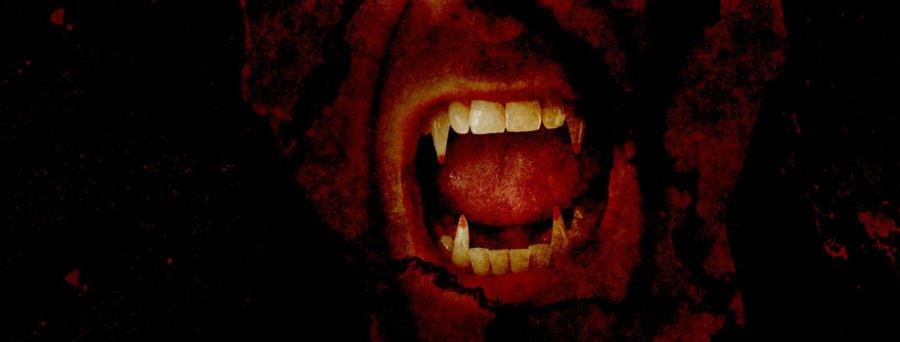
V Positive

The sun dominated the sky that day. Clouds cowered under its gleaming oppression. Even the birds seemed to fly low. Derek squinted, knowing immediately that he should have stayed home. And he should have. That was the day Derek’s life fell to shit.

He fought the heavy doors of the testing facility open. Their weight surprised him as much as his own weakness did. He told himself it was just early and he was tired, but honestly, lying to himself was getting old. There was nothing salubrious about it.

Inside, Derek was greeted by an older woman dressed in disdain. It was obvious that she hated being there, which struck Derek as odd considering most such facilities ran on volunteers. He’d never been in one, but many anecdotes attested that volunteers were generally people who had lost someone to the merciless disease. People whose grief drove them. Derek supposed it was likely that one day, the grievers might wake up to realize their services hadn’t done a thing to change circumstances. In fact, the numbers grew each week. That could make a person grow bitter – like the woman leading him down the hall.

“You’re running on borrowed time, Mr. Alvarez,” she announced with a tone that denoted lack of surprise.

Positive. He thought the word, but could not get his tongue to pronounce it.

“Positive,” she said for him, avoiding eye contact as she skimmed the test results. “And the gene,” she added without emphasis. Derek could have sworn he saw her shoulders drop an inch or two, though.

Derek watched her silently, choking back anger or hysteric sadness, whichever was threatening to push to the forefront. The bitter lady was now visibly smothering her tired loathing and reaching deep down for something that might mimic patience.

“The gene, as you must know, is a birth defect.” Spiel time. Standard, he imagined. “About 40% of people are born with it these days, and it lies dormant until it comes in contact with the virus. Now that that’s happened, you are V-Positive, and the gene will begin to mutate.”

She handed him two bottles of pills, placing the first in his left hand and the second in his right. Pointing, she continued.

“These ones will suppress the symptoms, and these will slow the change.”

Slow. Not stop. Derek winced. The med-cocktail would only slow the inevitable. Sooner or later, he was going to turn into a monster.

“The virus can be transmitted through any bodily fluid. We ask that you respect the right of others to not be infected by malicious intent.”

She looked away again – seemed to drift off to a place only she could see. When she returned mere seconds later, her eyes had softened.

“Even with the medication, certain circumstances can cause a flare up of symptoms. Among them is increased heart rate and body temperature. The sun and sexual activity are the two leading causes of outbreak. You’d do best to avoid these.”

She reached into her pocket and drew a small syringe, thick enough to insert the microchip.

Without warning she stuck the tip in Derek’s arm and injected.

“This chip will measure body temperature and other symptom levels. It also has GPS tracking. We will receive urgent notification the moment you become at risk.”

“And then what?” It was the only question Derek asked that day, but he already knew the answer.

She sighed and then looked him square in the eyes. Without quiver or hesitation, she said, “And then we put you down.”

Derek held her stare, and as he did so, his heart rate increased.
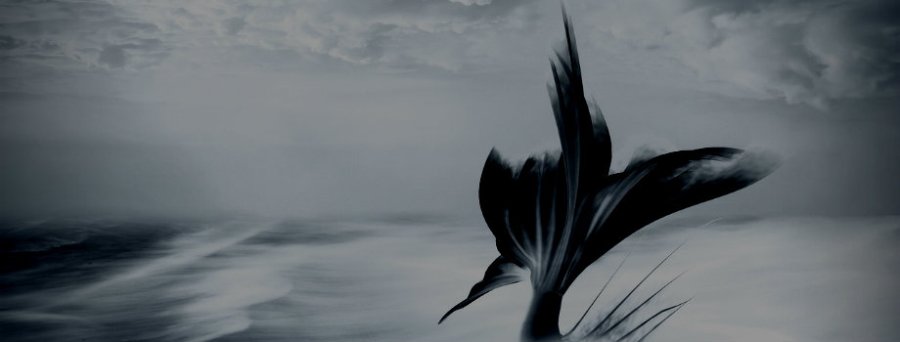
Devoured

“Please don’t make me,” Alice murmured.

Her brother, Eric, shot her a look and pushed the plate of food nearer to her face. The salt-water fumes charged through her nasal cavity and landed in the pit of her empty stomach. It lurched forward, but came to a prompt stop when it realized it had nothing to give.

She hated fish; she hated seaweed; she hated not knowing where she would ever find a decent meal, again. She did not, however, hate Eric’s ambition. Since they’d been on their own he had provided well above her expectations.

“What is it?” she asked hesitantly.

“I’m sure you don’t want to know.”

That was true. Whatever it was it would sustain her, but for how long? How long were they meant to live this way?

Pushing the dreary thought from her mind, she closed her eyes; took a deep breath; and scooped the mystery flesh into her mouth – gills and all.

Four years later, the world was still broken, but Alice was fierce and strong. She and Eric had become quite the team, only occasionally having brief encounters with other survivors. Mostly they’d make some trades and move on. Groups were not their thing. Eric had become quite the fisherman – and Alice quite the fish eater. Something about the meat fueled her. She was sixteen now and despite the elemental exposure, hard labor, and lack of rest, she had grown into a stunning young woman. She was tall; lean yet muscular, with eyes of emerald and caramel skin that seemed to glow in the sunlight. She looked remarkably healthy, and it was not lost on her that the men they would come across could not help but gawk. She was never in danger though, and seemed to wield a certain power.

It was the mermaid meat. She knew that, now. She gobbled it up happily every night. It seemed there was enough to last a lifetime – or several. It would have to. Consuming the mermaid’s flesh had given Alice eternal life, and eternal wealth. In these times, that just meant she would never starve, again.

Alice was pleased with her vigor, but it panged her to see Eric suffering, so. The mermaid could only be consumed by one; could only offer its powers to one. Eric had given it to his weak younger sister that day on the beach, and was paying the price with each passing month.

Often, Alice thought about what capturing the mermaid must have been like. She envisioned her brother, mighty and heroic, slaying the creature. In her fantasies, it was like a fairytale. But she knew in actuality, it would not have been so magical. It would have been violent, bloody, and monstrous.

The first time she saw a mermaid was the day before the war. It had washed up on the shore near their house, and Alice had been the first to spot it. The creature had a fish tail below, and smooth creamy skin up top – her breasts bared shamelessly. Her eyes were red and dug into Alice’s soul as she writhed and hissed. She even had horns, just like Alice was told she would. She was an omen, just as Alice had read about.

And now that she had consumed her (or one of her kind), Alice herself was the Omen. It would only be a matter of time.

Just before her eighteenth birthday, Eric drifted off to the next world. She committed his body to the sea, whispered well-wishes to his soul, and thanked the heavens that he would not suffer through her transformation. She could already sense it beginning, and she was ashamed of how good it felt.

The air became thick and clogged her airwaves, filling Alice with a thirst that even six years of destitution had never brought on so strongly. Naked, she crawled towards the sea, carried by her throbbing desire to splash about in its coolness. She huffed and puffed until she finally got far enough out to sink into its abyss. Below the surface her legs stiffened and coalesced until she had only one. A stinging sensation over came them as scales fought their way out of the skin that was simultaneously greening in color. The mass that had become her lower body grew a fin and flailed about, thrashing her body with it. A school of fish tried to scoot by, but Alice caught their scent. She could feel her jaw rip open, tearing at the hinges until her mouth hung low and wide. Instinctively, her body lunged towards the fish and she scooped them into her maw, devouring every last one. Her teeth, small but sharp, shredding apart the contents of her meal quickly and effectively.

She looked around; her body and mind screaming for more. She swam deeper and deeper, following a new monstrous intuition deep inside of her. The scent was staggering, and made her tingle from nose to fin. At the bottom of the sea she found it – a man, strung down with rope and a rock in his lap. He looked familiar, but mostly; he looked nectarous.

I See the Future

I see the future. It’s not pretty. It’s a hellish symphony trapped inside my head.

Time stops. Trees burn and crumble to ash. Waters freeze over. People in stasis beg for death but the Angel of Mercy ignores their cries.

Some call it the end. But I know it’s just the beginning. Slowly but surely we adapt. In all the ugliness of destruction is the beauty of evolution – the monstrous beauty of regenesis.

Skins toughen; harden. Eyes sink and sharpen. Gills sprout, furs thicken. Teeth become tools.

We divulge into mayhem and then find peace. It’s both catastrophic and cathartic. Life is precious; it’s worth killing for.

I see the future. It’s not pretty, but it’s pretty damn amazing.

Shyla Fairfax-Owen ©

Romance, Necromance

The moonlight showered down upon her skin, making it glow in all the right places. She tried to stay alert; tried to focus on her task.

The leaves rustled, and she couldn’t help but peek. The gravestone remained intact, but seemed to smirk.

Control was key.

A giggle swept through her. The art of control, the art of power – it made her quiver with excitement.

And then there he was.

He stumbled toward her, dazed. And when he approached she saw his eyes had sunken into an abyss. But still, behind them there was a glint of recognition… wasn’t there?

Shyla Fairfax-Owen ©

Destruction and Pleasure

It is with alacrity that these beasts set out to extirpate. So it is with that same enthusiasm that I confront them. My pulse dances under my skin, my heartbeat setting the tempo. The desire to demolish – to remove something from existence – surreal and inexplicable. It’s subhuman; the layer that most people try to suffocate beneath the surface.

But I don’t. I thrive in that lower layer, a manifestation of the social repression that has dragged humanity to this disgusting present; where it’s just the predator and the prey. I’m not a hero. I don’t kill them to save anyone. I kill them because I want to.

It offers me a grin, baring its salacity. I smile back, matching it’s hunger.

The Call

Under the guise of the sheep

You call to me, across worlds

The scent of your deception reeks

But still, I rouse for a peek


How fallible we are, after all

No costume, nor mask, can hide

Our weaknesses; outside us they reside

Assisting the sting of broken pride


So I came, as you intended

And I am reluctant to regret

The way I squirmed and smiled

Wrapped in your lies; no fret


I ignored the easy yellow glow

Beaming from your once kind eyes

And let you hunt me, willingly

Until there was only darkness and desire

Shyla Fairfax-Owen ©

And then the Feeders Came

Jeanette stared at the sunrise as it melted its glow over the city’s smog. The smell of jet fuel and sweat mingled through the air and carried up her nasal passage, making it tickle and itch. It was amazing to her that as the population shrunk, the stench of labor grew.

“Going hunting today?” Abe asked.

Jeanette shrugged. The question seemed superfluous. She couldn’t remember the last day she hadn’t hunted. She also couldn’t remember the last day one of the feeders hadn’t hunted her. The hunt was all that existed anymore.

“Listen,” Abe continued, his tone suddenly stark. “We gotta head north. I know how you feel about it but -”

Jeanette snarled dismissively. It was the closest she’d come to a laugh in a long time. A week ago she would have shot words as sharp as darts at Abe. Head north for what? It’s a bullshit lie. The feeders are there too, you know. They’re everywhere. You know that. But today, today she didn’t have the fight in her. So she just snarled, and kept her eyes facing forward. From her peripherals, she could see Abe huffing, his heart aching at her coldness.

“What’s left for us here, Jeanette? Vicki and I have thought it through. Even Garret says -”

“I don’t care what Garret says.” There they were, the darts. Laced with poison at the mention of Garret; an amateur who couldn’t last a day on his own. They had taken him in for his eidetic memory thinking he’d be  an asset – until a few days ago when he had almost gotten them all killed.

Abe stepped back as a show of faith. He knew he had taken the wrong approach and was surveying his mind eagerly for the right one. Jeanette faced him and let out a slow, frustrated, sigh. Her resistance to heading north was purely based on logic. Travelling ill-equipped and malnourished was a bad idea. It was best to stay put, where the grounds were familiar. But she had to admit, Abe’s logic was sound too.

The malnourishment would not be solved by staying put. They had depleted their food sources. The Hudson was their best bet now. As for Garret, he might be a coward and a poor shot, but he was a human map. He’d get them there. That was true.

“I agree, Jeanette. The theory that these things can’t survive the cold is just that, a theory. But how do we prove it if we sit here, rotting in the sun, shooting feeders from afar until we run out of squirrels and ammo?”

Abe smiled at Jeanette in that warm way that always settled her. By sundown the four of them were headed north, with Garret leading the way and Vicki by his side, gun-drawn at all times. She was one of the few soldiers who had stayed behind with the civilians when the military pulled out of their zone. Jeanette had prodded her for answers: Where was the military going? What was the plan? She never answered a single question. Within hours of the abandonment, the fences had been torn down and most of the population made a run for it – most right into the arms of feeders.

“It’s a good time for it,” Abe assured Jeanette who couldn’t help but look unsure of each step she took. He continued, “by the time we get there, we should still have a month or two before the snow.”

“And then?”

“And then, we acquire winter survival skills.”

“If we make it that long,” Jeanette mumbled.

“We will.”

On the third night, Jeanette scratched a seventh slash in her rock. She liked the idea of keeping track of how many feeders they encountered. It was a hangover from being a records keeper in a past life. She had to admit, the trek had not been quite as dangerous as she had expected, and it gave everyone a reason to keep going. Goals were healthy.

She sat by the fire, quietly thinking about how glad she was that they were all doing this together. Hell, she and Garrett were even being civil again. The fog was thick, a blanket that made everything seem a little unreal; a little magical, even. The air had a sweetness to it she couldn’t place, and even though they were still eating rodents, she was excited for the fish. The Hudson was known to have had over 200 species at one point.

As she lay under the heavy sky, Jeanette drifted off to all the best thoughts and let good dreams take her over. For once, things seemed to be falling into place.

And then the feeders came. A hoard of them greater than any other they had ever encountered. Jeanette was thrust awake by inarticulate screams. Vicki was probably giving orders to the others; Garret was probably babbling through tears; Abe was likely hollering for ammo. He was kicking wood from the fire towards the coming monsters. But they were still coming, and it was over before it began.

A small group leapt on Abe, taking him down in one swift motion. His screams became garbled as his wide eyes stared into Jeanette’s from across the way. She sat, frozen, only partially upright where she had been sleeping so peacefully just moments before. Simultaneously, a larger group descended upon Garret. He tried to run but fell, inviting the feeders down onto him. Vicki ran towards Jeanette, hand extended, wanting to pull her out of her shock. But Jeanette just stared at the hand, trying to process how her dream had so quickly turned into a nightmare. And how the world had so quickly become this Hell.

The feeders got Vicki from behind. The blood splattered across Jeanette’s face, bringing her back to life. She scrambled up and ran. She ran faster than humanly possible. She ran further than humanly possible. And not once did she look back.

Shyla Fairfax-Owen ©


Dawn (Octavia Butler): Book Review

Science Fiction; Fantasy; Post-Apocalyptic ♠♠♠♠♠

Author: Octavia Butler

Something a little different today: a book review of one of my all-time science fiction favorites (expect a few more scattered book reviews in the future). This book was published in 1987, the first of the Xenogenesis trilogy. It holds a rating of 4.09 on Goodreads.

Lilith Lyapo awoke from a centuries-long sleep to find herself aboard the vast spaceship of the Oankali. Creatures covered in writhing tentacles, the Oankali had saved every surviving human from a dying, ruined Earth. They healed the planet, cured cancer, increased strength, and were now ready to help Lilith lead her people back to Earth–but for a price.

This is a brilliant fantasy narrative that never misses an opportunity to remind the reader of the ongoing atrocities that exist in our world, while maintaining an intriguing story of its own.

I read Dawn without having ever really engaged with science fiction or fantasy before-hand, and it opened so many new doors for me. It was a very unique experience because I felt as though I was being introduced to a new world alongside the character, Dawn, who wakes up centuries after the destruction of Earth to find herself on an alien planet she never knew existed. In learning about the Oankali creatures and their way of life, Dawn is forced to reconsider everything she once knew about the world and how it works. As a result, a great number of issues are explored, making reading the book an extremely fruitful exercise in critical thought.

Please note: As I discuss the themes, some plot points will be eluded to, prompting this “minor spoilers” notice.

Race

Octavia Butler is one of the few renowned black sci-fi writers. So it’s no surprise that this book explores issues of race. What is a surprise, however, is that the exploration unfolds on two levels.

Dawn (a black woman) is the chosen one, that is, the Oankali have decided she will be a leader among a small group of people salvaged from Earth to restore it with them. However, prepping her for her return often mirrors the experiences of black slaves. She was taken from her home (Earth) without consent. She is kept in small, bare quarters, and initially told nothing about where she is or why. Her captors study her from a position of superiority and authority. Her attempts at rebellion result in punishment; and eventually she learns that the only way to survive is to accept her situation.

At this point, the roles shift to some extent. Now, Dawn has the opportunity to study the Oankali. She finds their appearance disturbing, and their culture impossible to relate to. In many ways, her Othering of the Oankali also mirrors the concept of race-supremacy.

Gender and Sexualities

Dawn is a strong female lead and the idea that she is chosen to be the first person back on Earth also positions her as a matriarch. Of course, there are feminist connotations to this that I can appreciate; but it is the Oankali that become the most interesting in regards to concepts of gender.

The Oankali can be male, female, or neutral. Of the three genders, only the neutral sex is the only one that can procreate. In order to do this, it must mate with a male and female (simultaneously). The Oankali therefore must maintain three-way relationships, and each child has three parents.

The entire concept is difficult to grasp and the scenes in which it is explained or performed are difficult to follow. This allows us to think about how narrow mainstream understandings of gender and sexualities are, and opens up discussions of traditional values. For Dawn, the idea of sex with the Oankali becomes a point of serious self-evaluation and stress.

Reproductive Rights

In order to rebuild the world, repopulation must take place. The Oankali have saved hundreds of humans, both male and female, but they are not planning on simply returning them to Earth alone. In fact, the Oankali believe it would be morally wrong to give Earth back to humans who would (according to their genetic makeup) inevitably destroy themselves and the planet once again. The compromise? The next generation to inhabit Earth would have to be human/oankali.

Interspecies relationships mean there is a lot at stake, namely, the continuation of the human race (or what will be left of it). Dawn and the other humans must decide how they feel about the extinction of a purely human breed – and whether they even have a choice in the matter.

Final Thoughts

This book introduced me to a genre, and made me think about so many aspects of humanity and society.

The prose were not the most elegant, but the story was fascinating. The plot does not move very quickly, but that is to serve the purpose of making the reader think about the ideas being presented. The main character’s point of view is just the right amount of confused, and I found that for the most part she was believable, even if not relatable. The book surprised me, and as far as conceits of the genre go, I think it deconstructed them in a way that made it a wonderful introductory text. A lot of issues were explored, and adequately discussed in the moments where Dawn and the Oankali try to understand one another.

I give this book 5 spades ♠♠♠♠♠*

*My rating is based on a five-spade system. The rating is decided based upon how well/uniquely the book: 1) develops story and plot; 2) develops characters; 3) accomplishes or deconstructs the conceits of its genre; 4) raises thought-provoking issues; 5) discusses important issues. This system has been developed according to my own definition of what makes a book "good." It is therefore subjective.

Night From Within

Dusk was settling in; no escape.

In the distance, a wrangle echoed.

Her propinquity with night suddenly ignited.

Like the blackness of pupils fixated forward,

The night called out her name.

An opal moon peered down devotedly.

Transfixed, she glared back at it.

A snake-like sensation crawled through her.

The night; it felt so divine.

Frightening; tantalizing; misinterpreted – a warning unheeded.

Provoked by its charm, she transformed.

With morality shadowed; monstrosity shined through.

The darkness was always so inviting.

Edacity came from within, of course.

The night was not at fault.

Shyla Fairfax-Owen ©


The Anticlimax

I guess you could say it was like a dream. The kind of dream that you’re aware of, but isn’t quite lucid. You go through the motions; let the dream carry you, because fighting it seems like a waste of energy. Yeah – I guess you could say dying was like a dream.

And I wasn’t alone. Death was a strong presence, there to collect – more patient than a bookie, but threatening nonetheless. I tried to laugh, really, I did. It was funny; like a bad movie that’s meant to be taken seriously but can’t be. I think they call those cult classics.

My death: A Cult Classic. I like the sound of that. It’s fitting, since my life turned out to be an accidental joke with an anticlimactic punch line.

“So? What now?” I ask Death. My tone is almost annoyed; almost apathetic; definitely irascible. I suddenly think I might have to take a number and stand in a line, and the mere thought of it is infuriating. But that’s not what happens.

Death leads me down a tunnel. There’s no light at the end of it or anything cliché like that. But it is a tunnel that seems to go on forever. It strikes me that my legs aren’t aching though, and I have to appreciate that. Silver linings.

“This isn’t going to be a ‘pick a door’ kind of deal is it? I hate those,” I snicker.

We finally arrive at a threshold. Beyond it, there is blackness. It’s absence of color, absence of light, absence of life. It makes me very uncomfortable, and I can’t even think of a snarky remark to cut the tension.

Death gestures for me to sign in, and I do. I sign my name, and beside it appears today’s date – my date of death. Again, I’m uncomfortable. It’s slowly but surely becoming real.

I look at Death. Death is also absence. There’s no black hooded cloak; rather, Death is just a shadow. And that’s when I realize, it’s my own shadow. I squint for a better look, but it’s unnecessary. For at that moment, the Shadow is coming to life. First, the eyes, then the hands. A vibrancy takes hold, as though watching one’s reflection manifest from thin air. Terrified, I instinctively hold my own hands in front of me. But they are dissolving, like sand in acid rain. And then… everything goes dark.

When the light comes back, I’m something altogether different.

*****

“Are you a ghost?” she asks me. I smile. Mainstream cinema has taken on the unfortunate task of representing a figure of the afterlife that floats through air and has a transparency about it. That’s why she’s confused. Indeed, I float. Indeed, my form is less than solid. But ghosts aren’t real. And I am.

“Not exactly,” I say. “I’m a spirit of the Otherworld.”

She ponders on this for a second; bites her bottom lip, then resolves to obtain more information.

“What does that mean?” she asks. “Are you dead?”

I smile, fully expecting to have to answer such questions. “Not exactly. My consciousness once belonged to a human, but that being has died, and its consciousness re-formed. It belongs to the Otherworld now, and it lives inside of me.”

I pause to let the little girl take it in. She is a willing believer, provided she is given the right tools. I watch her carefully process what I have said, and when I decide she is ready for more, I continue.

“Not everyone cans see us. You have a very special gift, and it will become stronger as you grow.”

She looks up at me, doe-eyed and curious. The compliment appeases her, but she’s still confused. I can see another question bubbling in her gut.

“So,” she finally begins, slowly. “Why are you here?”

Truth-time.

“A tragedy is going to befall your home soon. I’m here to cast a spell of courage upon you.”

The reference to tragedy sends a chill up her spine. Her shoulders tense, and she quickly tries to form her next question. Deep down, she probably knows I can’t answer it.

“Will something happen to my parents?”

I remain expressionless, and after a moment of silence, I move passed her unanswerable query.

“For all the elements of this world that seem out of your control, know that you are always in control of the elements within yourself.”

I let the words whisper through her, and while she’s still trying to interpret them, I gently release my magic. Then, with only a wink and a smile, I disappear from her forever.

Being a spirit of the Otherworld has given me the opportunity to bond with people in a way I couldn’t have when I lived among them. In that life, my consciousness was as selfish, petty, and mundane as the rest of them. I had always felt it, but could do nothing about it. But from the vantage point I have now, I realize how wrong that was.

People are not as fixed a state as I had once believed. And when that little girl crawls out of the fire, it’s my magic that will be carrying her. Her consciousness will be forever tethered to my strength. She will be amazing. And I will be a part of it.

I guess it’s still a little anticlimactic, but I’m no longer looking for an unattainable impact. Only humans have such trouble defining satisfaction.

In the Otherworld, everything is easier.

Shyla Fairfax-Owen ©