Generation Slasher

Jessica gasped lightly. A shadow lingered in her peripheral vision, and she had to hold her breath to keep calm; to keep from screaming. Her heart rate increased and tiny pools of sweat emerged from under her bangs. She could feel her pulse in her neck; a constant thud that she was sure must be visible, if not audible. Her stomach churned. She suddenly regretted the mixture of popcorn and soda she substituted for a freshly cooked meal. The room had always had a chill in it, but now Jessica could barely contain her shivering. Her teeth even wanted to chatter, although she had clenched them with such force it seemed more likely that they might crush under the weight of her fear.

And then it came. The man jumped out his hiding spot and pounced on the half naked teenage girl. She screamed as the knife penetrated deeper and deeper.

Jessica let out a yelp, and although it was embarrassing, she was glad she had. Now she could breathe again. Unable to watch the gore unfold on the huge screen before her, she squeezed her eyelids shut and tried not to imagine anything worse than what might actually be happening.

Beside her, Erin burst into laughter. It was genuine, but those who didn’t know her might find it obnoxious. Suddenly, Jessica was hiding not only from the blood bath on the screen, but from the other moviegoers who might be getting irritated with her friend.

“Shh,” she whispered, still refusing to open her eyes.

“Oh, please” Erin retorted. Her voice was lowered but it was certainly not a whisper.

The credits began to roll, cued in by the last victim’s fading scream and the rising level of the ominous theme song that had been a staple of the franchise for the last decade.

“That was the worst one. I tell ya, no more. I’m done with these sequels,” Erin blurted as they hustled out of the packed, dark, cinema.

“It was scary. And gory. That seems like it’s exactly your thing.” Jessica was feeling more like herself now that the film was over.

“Not even! It was just a hack. An imposter of the greats.”

Jessica rolled her eyes, knowing she was in for a long walk home.

“Think about it,” Erin started, “There was all the typical slasher icons: it had the maniac in a mask who is human but borders on the supernatural in his ability to kill, fight, and not die. It had the mixed bag of unsupervised teenage pals: a jock, a nerd who is cooler than he lets on, and two hot girls, one a bit more… promiscuous… than the other.”

Jessica nodded, wondering exactly where this was going.

“Then we have the setting – secluded getaway with a killer on the loose. But, of course, the kids don’t know that because they’re too wrapped up in their teenage love-triangle bullshit to listen to the news. Wrong place, wrong time. One by one, they get the axe.”

“Yeah, I’d say that about sums it up. All of them.”

“That’s my point. Those are the main ingredients – nay, the required ingredients to put together a slasher. It’s what you do with all the in-between that makes it a great film, or a waste of everyone’s time. This one was of the latter category.”

“Okay, so what makes any of these great? As you say, it’s all formulaic. The purpose it to make us squirm, and I do. Mission accomplished. Success.”

“No. It’s not that simple. Horror movies are made for horror fans. The people squealing next to us are the people we dragged with us.”

They turned off of Main St. and the wind picked up. Erin kept talking.

“Horror fans don’t watch it to scream. We watch for a bunch of different reasons; personally, I watch for the final girl, which this film severely lacked. The ‘no survivors’ angle seems original, until you realize that with no survivors there’s no story. No one to route for, route against, laugh at, identify with. All of that is embodied by the final girl; or, on the very rare and generally unsuccessful occasion, the final boy. Either way, that archetype is essential. I wanna see some girl that everyone underestimated kick some ass.”

“Wouldn’t that also be predictable?” Jessica couldn’t help but ask.

“Maybe. But it depends what you do with her.

There are two types of slasher films. You’ve got your run-of-the-mill reactionary film. Typical of the 70s, and it’s all about punishment. It’s a reaction against the civil rights movement, women’s lib, gay rights and anything else that was considered leftist or unnatural. All those things get knifed. The black guy, the sexual women or any form of sexual activity. Whatever isn’t the typical picture of 50s suburbia. In those films you’ve got a virgin for a final girl. She’s hope for the traditional values. Usually she’s even kind of a damsel in distress and she gets rescued.

Then you’ve got your progressive films which are all about the Other fighting back against the monster who represents social oppression. There, you get a badass final girl. She isn’t going to take shit, she’s smart, and she’s capable and she wins. It’s not luck, it’s strategy.”

Jessica pondered on that for a minute and was surprised by how much sense it made to her. Erin caught a glimpse of that in her eyes and smiled, pleased with her persuasive argument skills.

“You see,” she added, “horror is all about living vicariously through these characters. But that doesn’t mean we’re all masochists.”

“I might be. You don’t really drag me here. I could say no. I like the scares and I watch to squirm,” Jessica finally admitted.

Erin laughed. “Yeah, I guess you might be, then.”

Shyla Fairfax-Owen ©
Friday the Thirteenth: The Last Dinner Party

“In this world nothing is certain but death and taxes,” Arthur remarked smugly, proud of his ability to remember what most might consider Benjamin Franklin’s most memorable quote.

Lina smirked to herself. Arthur, with his graying hair and curled mustache, always struck her as quite a character. She had never carried on a private conversation with him, but rather enjoyed watching him make a pompous fool of himself at large gatherings.

The dinner table was set meticulously, with all twelve of them tucked properly in. Behind Iris, the night’s elegant hostess, there stood a large wooden clock that ticked obnoxiously. According to its reading, dinner should have began twenty minutes ago, but none of the servants had come out of the kitchen yet. There was, however, plenty of red wine being consumed in the meantime. Lina was hungry, and well aware of her light-headedness and how the alcohol was contributing to it. Still, she kept sipping, and smiling sheepishly, following the many disparate conversations without partaking in them.

Twice a year they did this. The faculty would get together at Iris’ for an extravagant dinner, four courses, and chat about the many interesting facts they’ve learned, studied, or made up, since their last gathering.

Lina had been teaching in the English department, alongside Iris, for three years now. She liked it very much. Iris’ husband, Richard, taught in the anthropology department. He and many of his closest colleagues were what Lina would describe as armchair anthropologists. They were enthralled by their own capacity to study from a textbook, but had not the desire to venture outside of the university halls. All the same, Lina tried to be grateful to have been taken in by a group. She had moved to Portland for the job, and had not known a soul in town. Now, she sometimes felt she knew too many.

Outside, a storm was raging. Lina had never seen a sky open up like that. Thunder and lightening cracked through the deep grays, roaring passionately. The heavy rain had come down on her as she made her way from the taxi to the front door, and up the many steep steps that led to it. It was a fabulous house, really. She especially admired the gargoyles that adorned the exterior. But it was a most impractical design. She had rolled her ankle just as she reached the top, and it was still throbbing, although she hadn’t mentioned it to anyone.

“Sorry I’m late.” It was Jim, wet and smiling. “I had the longest route, delayed by a funeral procession that cut me off, if you can believe it.”

Jim’s voice boomed, his announcement taking over any background conversations. He caught Lina’s attention right away. She had seen him in the halls, the new professor in the Art History department, but she hadn’t worked up the nerve to say hello. A chair had to be brought out for him, the thirteenth guest. It was placed directly across from Lina.

“I’m sorry,” Jim continued, this time his words directed only to Lina. “I don’t believe we’ve met. I’m Jim Melville.”

“Catalina Niles. Pleasure,” she nodded politely, intimidated by his dashing blue eyes.

They held each other’s gaze for a moment, but the spell was broken by the arrival of the salads.

It wasn’t until the meal’s third course that the electricity cut out. Iris had been in the middle of blabbing about her new haircut; she had gotten it that afternoon, and Lina supposed she was secretly upset that no one had yet commented. In the stark darkness though, the concern was moot.

Candles were immediately put out in abundance, but still, it was quite dark and some of the guests were visibly uncomfortable. With the music muted, there was only the crashing of the storm, threatening to come in. Voices became hushed; many lowered to a whisper. Dark and silence always seemed to go hand in hand.

Lina wished she could have gotten a good look at Jim and known what expression he was wearing when he asked her what her area of study was and she responded with: “paranormal literature.”

“Ghosts?”

Before she could elaborate, there was a sudden cry from down the hall, and the girly-silliness Lina felt melted away behind the sudden terror. Erica had gone to the washroom; it had to be her screaming out.

The group rushed towards the sound and came upon a sight that nightmares are made of.

Friday, November 13th, 1964; it became a day that would haunt for generations to come.

Erica was sprawled on the bathroom floor, and in the blackness Lina almost missed all the blood. Shards of glass sparkled in the bit of moonlight seeping in through an open window. As she made her way to her colleague, Lina slipped on the hazardous layer of blood and rain that covered the floor. She went down hard, landing in the broken glass which she later discerned had not come from the window, but from the smashed mirror.

Just then lightening struck, momentarily brightening the room so that the grotesque scene became clearer. Face to face with Erica, Lina saw it all. Her eyes were wide, staring lifelessly into Lina’s; her hair was matted and untied as if yanked a number of times; her nose was smashed into her face; her head facing a direction it should not have been able to reach on its own.

Lina swallowed a scream, unsure of how she managed it. Panicked, the group all began to look around at one another. It was obvious to Lina that they were all doing what she was doing – counting.

They had been thirteen at the start, but in the darkness, they hadn’t realized how or when they had become seven. Not that it mattered; none of them would make it out alive that night. No one would live to tell their tale. And forever after, the gruesome details would remain a terrifying mystery.

Shyla Fairfax-Owen ©

Hunger

Beth could not hush her appetence; not tonight. It had burrowed too deep inside of her, had become intrinsically linked to who she was. She had been embedded with a voracious appetite, and now she meant to satisfy it.

She looked up. A symphony of sounds was cluttering her mind: the crickets, an owl, the dancing trees scattering their leaves about. She could barely hear herself think. The moon was full and tinted with blood. The equinox was just around the corner. She needed to feed.

Beth tilted her head down again and continued her work. She swore it seemed that the digging was getting more and more tiresome each year. When she finished, she leaned against the tombstone to catch her breath. ‘Well worth it,’ grumbled the gnawing, insatiable, hunger inside of her. ‘Always well worth it.’

Droid Rage

Tully swung at Van’s jaw with as much power as he could draw up. The connection was perfect, sending Van down so hard that he kissed the doorknob before flopping to the linoleum floor. Tully took a second to admire his work – sturdy strength was his constitution – then he snatched the suitcase and took off down the corridor and out the side door, straight into the night.

The further Tully ran, the smaller the university became; until eventually the darkness swallowed it up whole. It was only then that he felt safe enough to send a d-note to his boss. He took cover in an alleyway and pressed the COMM button on his wrist. The holographic screen appeared. “Secured”, he whispered into it, and hit send. The message was sent directly to its linked COMM, Sera, who did not respond. The fewer the correspondence, the fewer the hackers knew.

Afterwards, he crouched and placed the suitcase gently in front of him. He was under strict instructions not to open it. Not that it would have been all that easy to if he had dared. The case was made of a metal denser than any Tully had ever encountered, and its bolts were DNA activated (something he didn’t have, anyways). None of that child’s play fingerprint recognition stuff – whatever was in that case was on lockdown.

The thing about being a professional thief is that you had to have a precarious nature to begin with. It meant that secrets were liable to get leaked. That’s why people came to Tully when they had something worth keeping plugged. He was one of the few who could get the job done, and be satisfied with the payout alone. Most people would not risk their asses without knowing what for. But Tully wasn’t most people. In fact, he wasn’t people at all. Being a droid had its benefits, and this was one.

Back at the safe house, the suitcase exchanged hands along with the money. Tully thanked his client – the man in white – and went on his way. Another mission down and another penny closer to Indigo. Yes, being a droid had its benefits, but Tully was sure being a man had more. Indigo was the only one out there with the technology to help him realize his dream, but she didn’t come cheap.

That night, Tully was mimicking sleep as he always did, when the d-note came in. “RETURN TO BASE.” It was an odd request at this hour, but Tully was only self-aware enough to notice that, not to question it. He certainly hadn’t been programmed to challenge Sera or her orders. So, he picked himself up and headed to base. Once there, Tully waited longer than he had expected to for Sera to arrive. When she finally did, she did so with a clatter, swerving in without elegance. Her hovercraft was noisy and dented, and she poured out of it dizzily.

“Accident? Are you in need of medical assistance?” Tully asked.

“You could say so. My hover was used as target practice this evening. A war with the Looters is inevitable, unless we beat them to the kill.”

Tully tilted his head and sent a signal to his chip to decrease room tone. He was unsure he had heard her correctly.

“One kill, Tully. And you’ll have your Indigo money.”

“But – I’m not programmed to -”

“You will be.” Sera hailed over her mechanic, Whisk.

It took only an hour of programming and rebuilding for Tully to be mission-ready. He was excited. His propensity for violence had been amplified, and he was that much closer to buying Indigo’s services.

“I don’t know why that’s so important to you,” Sera sighed as Tully geared up. “You have everything you need now – strength, intelligence, and as much reason and emotion as any person would need.”

“I only have what I’m programmed to have. I want to exist outside of this,” he pointed to his head, indicating his personality chip.

“Nobody exists outside of their heads Tully. We’re all just programmed. And the irony is that your desire to have the impossible – well, that makes you as human as they come.” Sera smiled, and sent him on his way.

Tully found the Looters exactly where he was told he would. From outside of the warehouse, he had to increase his ear chips to be sure, but once he heard their riotous thunder he was all systems go. With his leg and arm power set to max, he kicked in the steel warehouse door, sending it flying across the room and into a Looters’ throat. The rest of the gang raised their firearms which were some of the most sophisticated Tully’s info-read had ever picked up. A danger warning displayed in his line of sight for a moment, before his new ultraviolent programming overrode it.

It was a massacre. Five on one, but the Looters didn’t stand a chance. They were all at one time state-funded criminals, trained for battle in a time of less efficient droids. Some had even been backseat drivers, controlling droids in battle from a safe distance, which meant they had rarely even put their ill-training to use. Tully came at them with a force they could not have predicted. He was stronger, faster, impervious. Their fire bounced off of his strong metal skin. In hand-to-hand combat, his blows were fatal, while their caused more harm to themselves than to him. By the end, the five men lay mangled, sodden in their own blood.

Tully took a second to admire his work. His last job. Tonight, he would pay a visit to Indigo, and she would give him what he wanted – or else.

Shyla Fairfax-Owen ©

Haunted

There was no way to undo it. That’s the thing about surviving. The medley of blood, hair, and fingernails just kept swirling about in Jordan’s mind, imprinted behind his ocular nerve. Tugging and pulling so that the recalled sight of it was accompanied by physical pain. It was all he could manage to spread his eyelids every now and again; check if the world was really still there – wondering if he had really made it out, wondering if Jess and the others really hadn’t.

The melody of the epidecium hummed deep in Jordan’s ear drums, rattling them back and forth no matter how unpleasant. This was what it was to be haunted. The ghosts were only inside of his head, but they were real. They were persistent. They were his friends; all of them dead, along with the biggest part of him.

“Jordan Marks?”

Jordan looked up, surprised he had recognized a sound outside of himself. The secretary was trying to smile as she held the door open for him. “Dr. Casey will see you now.”

The doctor was gentle, but rushed. There were a lot of patients in the waiting room, so it came as no shock to Jordan that getting the prescription had been so easy. Anti-depressant experiment number 4. Maybe this one wouldn’t make him tear at his skin, drool on his sheets, or mix-up his words. Maybe.

The first few hours were good. Relief came like a tidal wave, throwing him off balance then gracefully carrying him away. He didn’t think about Jess; about the blood, the hair, or the fingernails. Instead, he thought about the beach on a sunny day. But once the high dulled, so did the sunshine, and Jordan was back in his dark, damp, room. No – he was back in the dark, damp, cave. And there was the medley of gore he just couldn’t escape. He thrashed in the swamp of sewage and bodily fluids. He clawed at the rocky walls, and screamed so loud he hoped he might break, and somehow blind himself from the horrors before him.

Jordan’s mother crashed through his bedroom door and eyed her son helplessly as he scrambled violently in his bed. She cried out his name through a tear-soaked tongue, trying to remember a time when he was just a normal teenager, vibrant and brave and full of life, seeking an adventure. A time before the monsters came.

Shyla Fairfax-Owen ©

Bargaining

Story #2: The Fixers Series

I look over at Gus. He’s a mess. His hair, the little bit of it that he has, is dishevelled and his eyes are red and swollen. His tie hangs loose around his neck, and his white lab coat is on inside out.

“What time did you leave last night?” I ask him, trying not to sound judgemental.

“Huh?” I startle him out of his disorganized thoughts and he jumps a little. “Oh, uh, I’m not sure. Two or so, I guess.”

I nod slowly calculating my next move. He should go home, but the suggestion will offend him.

“Do you want me to take over the Dylan file? I’m done with mine.” It’s the least I can do; I had created the back log by wiping the history from our time mover – a secret I am still keeping.

Gus looks up from the his computer screen and eyes me suspiciously. But then a relief showers over him and I smile gently as he steps away from the desk.

“Coffee?” He offers.

I smile and nod. I consider telling him to fix his coat, but I let it be. By 8:30, Gus is passed out in the lounge – I never did get my coffee.

At 9:05 the front doors swing open, violently thrashing through the air. A woman storms up to the desk, waving a gun. Behind her, I can see Ed, our security guard, lying flat on the pavement outside. I try to decide what the smart move is, but then I realize I’m only telling myself to think; I’m not thinking. I’m panicking.

“You! You in charge?”

I try to tell her that I’m not but no sound is released when I open my mouth. I’m still staring at Ed.

“Hey! You!” she hollers again, this time the gun is pointed right at me. “Are you a fixer?”

“Yes,” I manage, forcing myself to look into her eyes now.

She’s tall and lean, with long brown hair, some of which is tucked into a wide brimmed black hat. She’s hiding behind dark sunglasses, leather gloves, a trench coat and high heels. I try to take a mental photo of her, for Ed.

“What’s your name?” she asks, leaning in to intimidate me further. It’s unnecessary; I’m terrified.

“S-Sasha. Sasha Green.” My voice is barely more than a whimper, and my heart is speeding up. In her glasses I see my own reflection, and I’m humiliated by the small warped image of myself I see.

“Well, Sasha Green. I have a job for you. An urgent one.”

She slams a medical ID bracelet down on my desk. “Fix it.”

“I can’t do that. It’s – we – there’s a system and laws and -”

“Fix it.”

Realizing there’s nothing I can do to reason with this woman, I pick up the bracelet and scan the barcode into my computer. June O’Donnell: 37 years old, Chief Financial Officer at Cane Inc., Recovered: Extensive brain damage (chipped).

Recovered? Fixers have already taken care of this. I scroll down to see the photo. It’s the woman in front of me, holding me at gun point.

I look up at her, unsure of what to say. She must read my confusion immediately, and removes her sunglasses. Her eyes are watering, welling up with tears, and sparking. A mechanical reaction to water. She’s been chipped alright, made cyborg too. It’s a relatively new technology: to recover lost or irreversible bodily damage metal parts are melded into the patient’s fibres. For damage to the brain that extensive, a chip can be used to replace any of the broken functions. Most often, it’s memory loss. The chip will store new memories for you, and false old memories can be implanted at the patient’s request. It changes who you are, but at least it fills the holes. The holes can drive some people mad. But this woman, June, seems to have gone mad just the same.

I’m watching her, trying to assess her state of mind, and what it is she wants from me, when she lashes out. She slams her hand down on my desk with as much force as she can, and it’s a lot. The gloved hand must be cyborg too. I leap back, and a scramble comes from down the hall.

No. Gus.

“Who’s here?!” She hollers out towards the noise, and Gus exposes himself. June cries out and shoots a bullet in the wall behind me. For a second, I think it hits me, and I’m paralyzed. But when the sting doesn’t come, I exhale.

“I’ve called for help so you’d better get moving!” he yells out confidently. I admire it, but it also worries me. I have no idea what she is capable of when threatened. And cyborg’s are not exactly frangible.

“Help?! You want help? I want help.” She doubles over, and more sparks fly from her face. “Fix me, please.”

“You’ve been recovered, it says so right here,” I say, still completely confused.

“You call this fixed?” she tears off a glove to reveal a cold metal hand. “This is not fixed. It’s broken. I was meant to die on that table and Cane Inc. paid you to bring me back! Against my will!”

My heart stops. I look over at Gus and a veil of embarrassment washes over him. Could he have really cut a deal like that? His expression tells me yes. I’m mortified. I guess I’m not the only one who makes mistakes around here.

“The chip,” he whispers finally, “it’s a new technology. It needed to be tested and”

“And,” she moans, imploring him to admit his mistake.

“And we were told…” he stops, drops his head.

June looks back at me, more sympathetic than violent now.

“Fix it,” she whispers.

I nod slowly, and glance at Gus. He’s on the floor now, crumbled by guilt.

I grab her file, and walk over to the machine.

“September 1st,” she says.

I nod again, and set the date. I don’t know exactly how I plan to stop this from happening, but I will. I’m a fixer, and I fix things.

Shyla Fairfax-Owen ©

Click here to read Story #1: An Easy Fix

Bonded

Bonded Excerpt

I’ve never been a penitent person. Some call it mental derangement, some call it sociopathy, but I just call it love. Some say I’m a victim of that love, but I don’t see it that way. I have never been a victim.

Description

A young woman is called upon by a mysterious man to a mysterious manor… and she can’t resist.

Publication Link

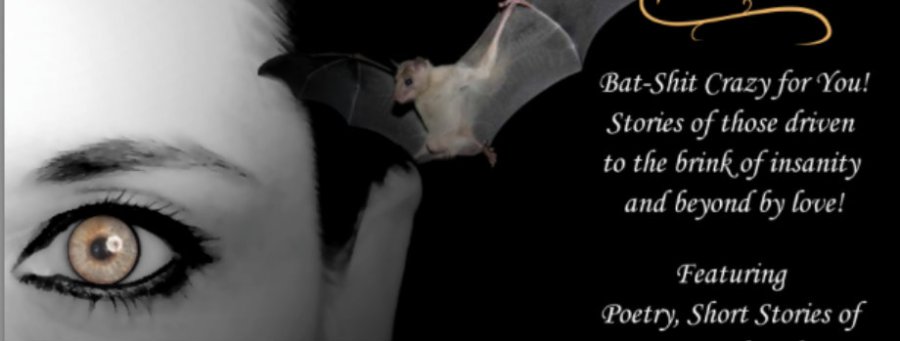
Read the complete story for free in the Siren’s Call Ezine, Issue #23: Bat-Shit Crazy for You

Shyla Fairfax-Owen ©

Grace and the Varmin

Donnie had never been particularly perspicuous, so when he asked Grace to attend the concert with him she was taken slightly aback. Up until that moment, she had been unsure whether he had any real interest in her, or if he had just been making the best of the situation. She had been a gift after all; a compromise; a symbol of gratitude – though never treated as one. A concert, though, was a clear indicator of affection. Or, at the very least, fondness. It eased her mind, and even loosened the figurative cuffs around her wrists.

The rendition of Sonata no.14 was poor, but Grace tried to appreciate the effort behind it and clapped heartily with the crowd when it was expected of her. She snuck glances of Donnie every now and again, but he seemed indifferent to all of it. At the intermission, she hurried off to the ladies’ room – an excuse to gather her thoughts.

“I’m awful tonight, I know.”

The voice was soft but sent a jolt through Grace, who had not expected Donnie to enter the washroom. Her face flushed immediately, and she stuttered without eloquence. She had no idea what the appropriate words were, nor what reaction Donnie was trying to garner from her. That always made her nervous – not knowing what others wanted of her. He approached slowly, eyes locked into her own. She tried to look away, but found herself mesmerized by his forwardness. In all the time she had know him, he had barely said more than a few words directly to her. In fact, he rarely spoke at all.

Grace’s knees buckled as she backed into the counter, clawing the edge with her satin-gloved fingernails. Donnie came within a couple inches of her and stopped dead. The intensity in his eyes melted away, leaving behind those of a confused youth. He shook his head as though awakening from a trance and looked around. Grace cleared her throat, still absent of vocabulary. In the distance, the bell sounded to urge the audience back to their seats.

“We should,” Donnie started.

He did not finish. He simply wandered out.

Grace spun to face the mirror again. Her dress was a vibrant pink that shone under the pot lights. Disoriented, she tugged at the strapless number to raise it higher on her bust, tucked a few rebellious curls back into her diamond encrusted hair clip, and exited the washroom.

Donnie was nowhere in sight. Rattled, Grace walked back to her seat on the balcony. He was not there either. After the show, Grace stepped into the cold night air and used her cellular to dial her driver. It was supposed to be his night off, but he would have to make an exception. He brought her home, where she undressed and retired to the library; one of the few rooms Donnie had granted her access to (although it was not without a fight).

The next morning she attended to her usual chores. It was while she was dusting the entertainment set and watching the news that Grace heard of the gruesome murders of two concert goers. Both had been wearing stunning pink dresses, much like her own.

She turned away from the screen, resisting reaction. It was not her job to understand Donnie, or his motives. When he came home, she would not even ask the question.

Shyla Fairfax-Owen ©

The Antidote

Johnny entered the pub through the side door and looked around. The atmosphere was exactly what he had been expecting. The room was dimly lit by low hanging chandeliers that were caked with dust, most of the stools at the bar were occupied by middle-aged men sitting in silence and sipping aggressively, and in the back corner a booth was enlivened by two drunkards carrying on a desultory conversation. Johnny took a deep breath and strode over to an empty booth near the back door. He was close enough to the drunkards now to see their spit flying back and forth and wished he could settle in elsewhere. It was too risky though; the instructions for this meeting had specified this booth, and he did not want to get it off to a rough start.

“What’ll it be?” the waitress asked. She was the type of woman who Johnny guessed was much younger than she appeared. Chronic exhaustion seemed to be taking its toll.

“Um, just a water please.” The waitress sighed, dropping her hands to her side, still lazily gripping the pen and pad.

Johnny tried to smile politely but she took off without a glance back. Only a little scathed by her rudeness, Johnny slumped down in his booth and began tapping his fingers impatiently on the poorly wiped down table.

It was nearly an hour after their agreed upon meeting time when Oliver finally entered. Johnny perked up at the sight of him and gulped the remainder of his second coffee. It was tepid and strong; too strong in Johnny’s opinion but he kept ordering them to keep from further upsetting his waitress.

Oliver gracefully took the chair opposite Johnny, and it was not until they were eye level with one another that Johnny saw how much the other man was sweating.

“I’m sorry I’m late,” Oliver whispered. “It’s been a difficult morning.”

Johnny nodded sympathetically, but said nothing.

“Look doc,” Oliver continued, leaning in now, eyes wide. “This needs to happen, and it needs to happen now.”

Stunned, Johnny began to stammer in opposition but was abruptly cut off by more of Oliver’s urgent whispers. Johnny shifted in his seat, discomforted by the intensity.

“I’m not messing around here. It’s serious. You gotta help me.”

Johnny nodded. Panic was obviously taking Oliver over. Johnny had hoped he would be able to convince him to come back to the lab with him for a proper assessment; a night of observation, even. But Oliver was intent on meeting in this very spot, which should have been a red flag that no amount of common sense was going to change his mind.

“I want the cure. I want it now.”

“It’s not like that Oliver. Like I said, we need to evaluate the circumstance surrounding the -”

“Doc!”

He raised his voice nearly, leaping out of his seat. Immediately afterwards, he became aware of the attention he had drawn, slunk back down, and glanced around nervously. Lycanthropy in such early stages had many possible symptoms which depended upon the infected person’s own genetic makeup. But no matter how you analyzed the data, aggression and the inability to control oneself were always at the top of the list.

Johnny tensed, trying not to let Oliver sense his building fear. The scent, as far as Johnny’s own studies showed, could enhance the potential for sudden onset rage in the infected.

“Okay,” Johnny whispered. “Order a drink.”

Relief overcame Oliver. It was visible, especially in his demeanor which lightened significantly. Oliver hailed over the waitress and had her bring him a tequila. No salt, no lemon. After a deep breath, and a slight smile, Oliver shot the liquor back and rubbed his eyes as if just waking up. Johnny could see how happy he was in that moment; it was a moment he had dreamt of for weeks on end now. The stress of the change had been an unbearable burden, but it would be over now. Johnny discretely passed him the vial under the table, and as it exchanged hands he felt a thankful squeeze of his own.

With that, Johnny rose from the table and nodded a friendly goodbye. As he made his way back to the side door he could hear Oliver order a second tequila; the one he’d poor the vial contents into. It ached Johnny to know he would not get the chance to study this one. All the same, the fallacy of the so-called antidote would be taken willingly, which was to Johnny’s benefit. Yes, they needed to die; but he always preferred it not be directly by his hand. He slept better that way.

Shyla Fairfax-Owen ©

The Sickness

I wheeze, sniffle, muffle, and cough – the common cold. Only it’s not so common for me. When it comes, it knocks me down like a vengeful wind. Ten feet ahead of me the world is consumed in a dizzy fog; a miasma of infectious symptoms envelope me so that even my dog stays away.

“Uhh,” I groan as the morning light splashes across my face.

Some of my senses dull, while others seem to heighten, which leaves me even more disoriented. In the distance, I think I hear the hiss of a missile, and for just a moment I panic. Then I realize it’s the kettle and a wave of relief and lulled excitement washes over me. Warm liquid is my euphoria.

I stumble towards the kitchen, fighting my way through the spider webs. In my haze of hindered health, I have forgotten how quickly Halloween is approaching, and how energetically I had decorated only days before the germ storm.

“Morning sunshine,” he whispers as he kisses my cheek.

I nod and force a smile as I reach for the steaming mug. Wordless, still, I gesture to him to shut the blinds and he does. The sudden sensitivity makes me feel like a vampire, which is amusing since it will be my costume in a few days. I almost chuckle, but manage to shiver instead, and he drapes my housecoat over my shoulders.

“You should stay home,” he insists, again; this time I choose to oblige.

After he leaves I send a text message to my assistant saying that I will be working from home today. Neither of us believes it.

A hunger I cannot satisfy courses through me so I crawl back into bed, fully giving into my new found monstrosity. I hide from myself all day and by the time I rise the moon has too. Pleasantly numbed, I stretch out and head to the washroom. The flip of the switch disturbs the darkness and sends my ailments into a frenzy. Squinting and yelping I hit the switch again and let the darkness ease me, but not before catching a glimpse of my reflection.

I’m paled, with sunken cheeks and dark circles around my eyes. Absorbing the welcomed darkness I smack my tongue against the roof of my mouth and realize I am parched. I twist the tap and cool water streams from it. Feverishly, I duck my head and take it in straight from the source. As I drink, my tongue works itself around my mouth, and I can’t help but wonder: have my teeth always been so sharp?

As if testing them, I pierce my lower lip and blood swirls with the water to create a warmer, thicker substance. I have to admit, I like it. In the background I can hear my dog whimper – it’s the only sound I can hear clearly, now. The only smell that is precise.

Shyla Fairfax-Owen ©